
Concept Development: Turning a Product Brief Into a Viable Direction
Once a product opportunity has been defined, the next challenge is turning that brief into something tangible enough to evaluate.
This is where concept development begins.
Concept development takes the commercial and technical requirements established during product definition and explores how those requirements can be brought together into a workable product. It is the stage where product architecture, layout, form, functionality, user experience and manufacturing considerations begin to take physical shape.
The objective is not simply to produce an attractive concept. It is to establish a credible direction that can be assessed, refined and eventually developed into a manufacturable product.
What is concept development?
Concept development is the process of exploring and resolving how a product should work before committing to detailed design and engineering.
At this stage, the development team begins testing different ways of satisfying the product brief. That may involve alternative layouts, product architectures, mechanisms, materials, component arrangements or manufacturing approaches.
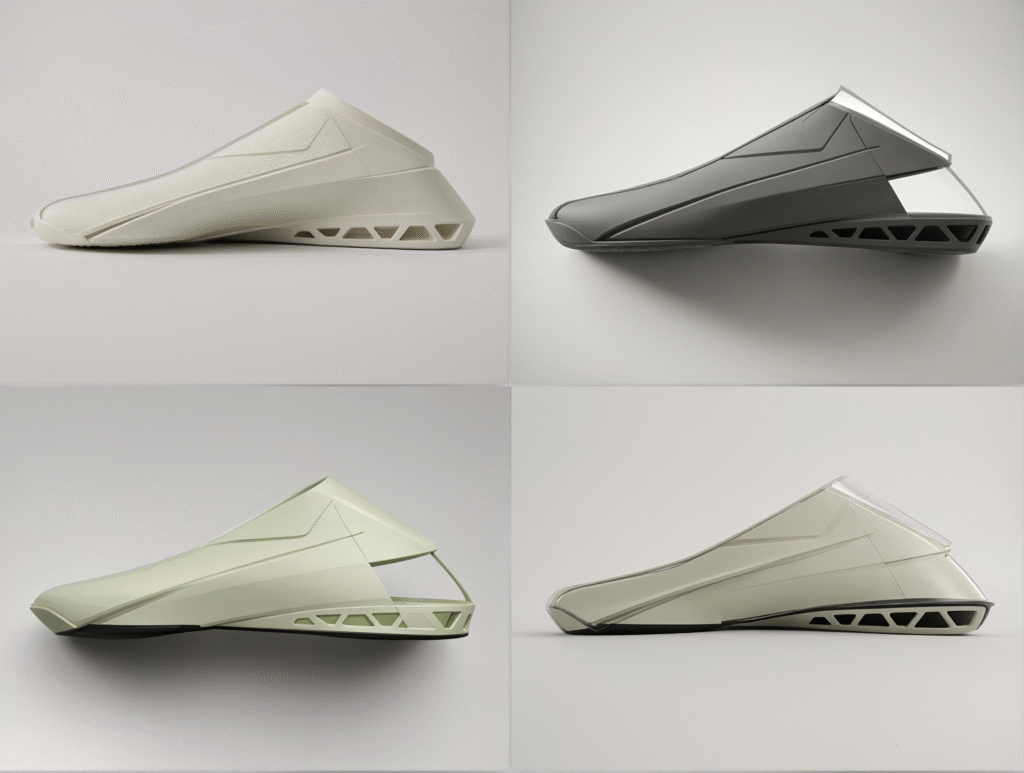
Depending on the product, this work may be carried out through sketches, preliminary CAD, packaging studies, mock-ups, visualisation or early prototypes.
The purpose is to compare possible directions while the cost of changing those directions is still relatively low.
Rather than asking, “How do we engineer this product in detail?”, concept development asks a more fundamental question:
What is the best overall way to make this product work?

Start with the product brief
Concept development should not begin from a blank page.
The product definition should provide a set of commercial, customer and technical requirements against which different concepts can be evaluated.
This keeps the work focused on solving the right problem rather than simply generating interesting ideas.
For example, if a product must meet a specific manufacturing cost, fit within a defined physical envelope, accommodate particular components and deliver a certain user experience, those requirements should shape the concepts from the beginning.
Without this framework, concept development can easily become subjective.
A concept may look appealing but fail to satisfy the commercial case, packaging requirements, manufacturing constraints or intended use.
A strong brief gives the development team something objective to design against.
Explore more than one direction
One of the most valuable parts of concept development is the ability to compare alternatives before a large amount of detailed work has been completed.
The first idea is not always the best idea.
Different concepts may solve the same problem in very different ways. One option may provide the best user experience but introduce manufacturing complexity. Another may be inexpensive to manufacture but compromise product performance. A third may provide the strongest overall balance.
Exploring alternatives helps expose those trade-offs.
The intention is not to generate dozens of concepts for the sake of variety. It is to explore enough meaningful alternatives to understand the available design space and identify the strongest direction.
This also creates better conversations between commercial, technical and manufacturing stakeholders because different options can be assessed against the same requirements.
Establish the product architecture
An important part of concept development is defining the overall architecture of the product.
This means determining how the major elements relate to one another.
For a mechanical product, this may include the arrangement of structural components, mechanisms, electronics, access points and user interfaces.
For a vessel, it may involve hull form, layout, machinery, systems, accommodation and deck arrangements.
For a manufactured consumer product, it may involve the enclosure, internal components, assembly strategy and interaction points.
These decisions can have a major effect on everything that follows.
If the architecture is poorly resolved, detailed development can become an exercise in trying to package components into a fundamentally unsuitable arrangement.
Resolving the architecture early creates a stronger foundation for engineering.
Consider the user at concept stage
User experience should also influence concept development from the beginning.
Ergonomics, access, visibility, reach, maintenance and interaction with the product can all affect the most appropriate design direction.
These considerations are often easier to change during concept development than later in the programme.
A layout that appears efficient in CAD may be difficult to use in practice. A service item may technically fit within the product but be almost impossible to access. A control may be positioned correctly from an engineering perspective but poorly from the user’s perspective.
Evaluating these factors early helps avoid expensive changes once detailed development or tooling has begun.
Bring manufacturing into the conversation
Concept development should also begin considering how the product could realistically be manufactured.
That does not mean every production detail needs to be resolved at this stage.
It means understanding whether the proposed concept is broadly compatible with the intended manufacturing approach, production volume and available suppliers.
Material choices, part count, tooling requirements, assembly sequence and achievable tolerances can all influence which concept represents the strongest direction.
A product intended for low-volume manufacture may justify complex fabricated or machined components. A higher-volume product may need to be designed around moulding, tooling or automated assembly.
Those decisions can fundamentally change the architecture of the product.
Considering them early prevents the manufacturing strategy from becoming an afterthought.
Use visualisation to improve decision-making
Concept visualisation can be particularly valuable during this stage.
Preliminary CAD, renders and physical mock-ups allow stakeholders to understand the proposed product more clearly than sketches or written requirements alone.
They can also help reveal issues that may not have been obvious when the concept existed only as an idea.
Proportions, interfaces, packaging constraints and user interactions become easier to evaluate once the product has been represented visually.
Visualisation can also support early conversations with customers, distributors, investors or internal stakeholders before a production product exists.
The important point is that the visualisation should support development decisions.
It should represent the current level of product maturity accurately rather than imply that unresolved details are already final.
Evaluate concepts against the requirements
Concept selection should be more disciplined than simply choosing the option that looks best.
Each concept should be assessed against the product requirements established earlier in the programme.
That may include performance, user experience, manufacturing cost, production complexity, packaging, technical risk, serviceability, schedule and commercial positioning.
No concept is likely to be perfect across every measure.
The purpose of evaluation is to understand the trade-offs and select the direction that provides the strongest overall balance.
This creates a documented reason for the development decision and gives the team a clearer basis for moving forward.
Refine the preferred concept
Once a preferred direction has been selected, concept development usually continues with another level of refinement.
The objective is to resolve the major uncertainties before detailed design begins.
Key dimensions can be confirmed, component interfaces improved, systems packaged more accurately and manufacturing assumptions tested.
This refinement helps determine whether the concept remains viable as additional detail is introduced.
It also allows the preliminary product specification to be updated based on what has been learned during the concept stage.
By the end of concept development, the product should be significantly more defined than the original idea, but still flexible enough for detailed engineering to resolve the remaining technical issues.
Concept development creates another decision point
Like Product Definition, Concept Development should lead to a clear development decision.
The business should be able to determine whether the concept is sufficiently strong to progress into detailed design and engineering.
In some cases, the answer may be to proceed.
In others, the concept may need further refinement, additional technical investigation, prototype testing or changes to the original product requirements.
A concept may also expose a fundamental issue that makes the original proposition commercially or technically unattractive.
Discovering that during concept development is significantly less costly than discovering it after tooling or production has started.
The value of the concept stage is therefore not just in creating the product.
It is in creating enough information to make better decisions about the product.
Creating a stronger foundation for detailed development
Detailed engineering becomes much more effective when the team is working from a resolved concept.
The major architecture has been established. Important packaging decisions have been made. User requirements have been considered. Manufacturing constraints have started to influence the design. The preferred direction has been evaluated against the commercial and technical brief.
That does not mean every issue has been solved.
It means the programme has progressed from an idea to a coherent product direction.
From there, design and engineering can focus on resolving the details required to make the product function, manufacture and perform as intended.
Ultimately, Concept Development is about answering another fundamental question:
Do we have a product direction strong enough to justify detailed development?
Getting that answer right creates a more controlled transition into engineering, reduces unnecessary rework and improves the likelihood that the product can progress successfully toward manufacture.
Developing a new physical product?
Frankie Sterling Studio helps businesses translate product opportunities and development briefs into viable concepts that can be evaluated, refined and progressed toward detailed design and manufacture.
Discuss your project →